PLANNING — BOOKING
Private Chef Kitchen Requirements — What Your Kitchen Actually Needs
Hosts worry about the kitchen more than anything else, and usually far more than they need to. Here is what a chef actually needs from your space, what we bring with us, and what to tell us before the day.
Less than you think. A standard home or villa kitchen with a working hob, an oven, some counter space and running water is enough for almost every booking, from a dinner for two to a tasting menu for ten. You do not need a professional range, a walk-in fridge or a second oven. from R850 pp per person · Min invoice R3,900.
The short answer
Less than you think. A standard home or villa kitchen with a working hob, an oven, some counter space and running water is enough for almost every booking, from a dinner for two to a tasting menu for ten. You do not need a professional range, a walk-in fridge or a second oven.
Every booking with our private chef service in Cape Town starts with a menu consult, and the kitchen is part of that conversation. We ask about equipment, space, power and access before the menu is locked, so anything unusual is solved before the day rather than during the first course. If a kitchen runs small or off-grid, we bring induction backup. If the menu needs plating kit, we bring that too.
The four basics
These are the only things we genuinely need from the room itself. Everything else is planning.
Included
- A working hob: gas, electric or induction all work. Tell us which, and how many plates actually heat.
- An oven: one is enough when the menu is designed for it. Older ovens are fine; we just want to know they run hot or cool.
Quoted separately
- Counter space: a clear run of counter for prep and plating. In very compact kitchens, plating moves to an adjacent counter or table, agreed in the consult.
- Running water: a sink the chef can use throughout the evening for prep and washing up.
What helps on the day
A few small things make the evening smoother. Clear a shelf or two in the fridge, because the chef shops on the morning of your event where possible and the ingredients need somewhere cold to wait. If you have a favourite platter or set of plates you want used, say so in the consult.
None of this is a condition of booking; it just keeps the prep window for cooking. At the end of the night the kitchen is left spotless: surfaces wiped, equipment cleaned, washing-up done. The service is not finished until the room looks the way it did before we arrived.
Power and load-shedding
Power is the one variable a Cape Town kitchen cannot fully control, so we plan for it rather than hope. When you book, tell us whether the house has an inverter or a generator and which load-shedding area it is in. We check outage timing against your date in the consult, and again in the week before if the schedule is active.
If a slot lands during service, the menu is built to hold through it: gas hobs, braai coals and cold courses carry the evening, and induction backup covers small or electric-only kitchens. Many estates and larger homes run generators or inverters, which makes life easier, but we never assume one exists. Our terms say we plan around notified load-shedding windows, and that is exactly what the consult is for.
Small kitchens: apartments and heritage homes
A compact kitchen is routine, not a problem. In a Sea Point apartment, a two-plate hob and an oven is enough when the menu is written for it. In a De Waterkant cottage, a hob, an oven and a metre of counter covers a table of two to six. City Bowl heritage homes sometimes come with older ovens, so we check the equipment first and bring induction backup where it is needed.
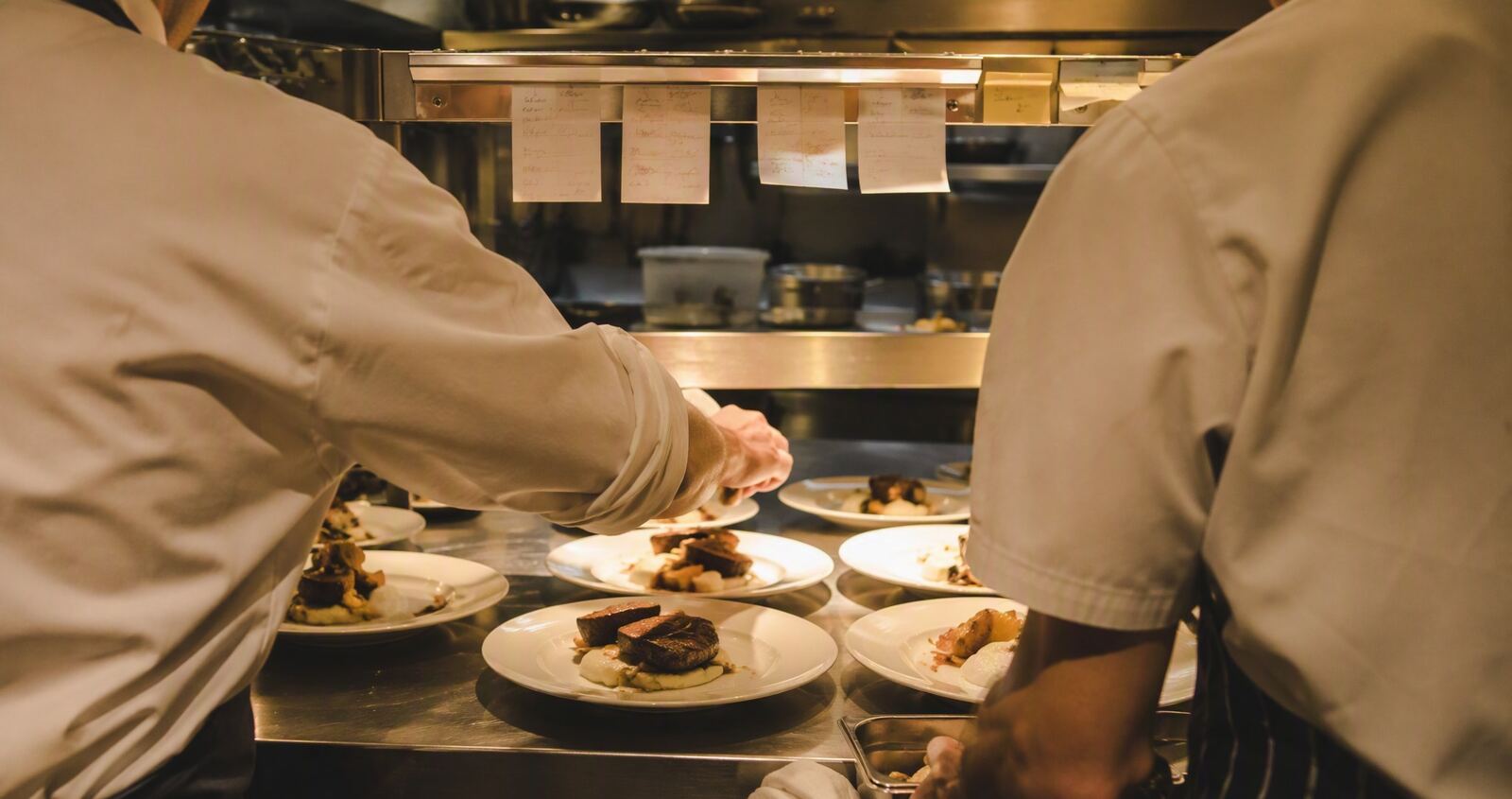
What changes in a small kitchen is the menu design, not the quality. The chef chooses dishes that finish on the hob rather than needing two ovens at once, builds more of the work into the prep window, and stages plating so the counter never becomes a traffic jam. For tasting menus, our guide to hosting a tasting menu dinner at home covers pacing in more detail.
Villas, beach houses and estates
Holiday villas vary more than any other kitchen. Some are showpieces with double ovens and a scullery; others look beautiful and have one blunt knife and a kettle. Beach-house kitchens get scouted first, usually from a few photos you send on WhatsApp before the menu is locked, and induction backup comes as part of the standard kit.
Estate homes in Constantia and the Southern Suburbs tend to have family-scale kitchens with pantries and sculleries, and we use them fully. On wine farms we confirm kitchen access, load-in routes and curfews with the venue or farm manager in advance. If you are staying a week rather than a night, a villa chef learns the kitchen on day one and plans the rest of the stay around it.
Access, arrival and timing
Access is the other half of a smooth evening. Tell us about these up front and we build them into the plan.
Included
- Gate codes, intercoms and staff entrances, so the team is not waiting at the gate with the groceries.
- Parking and load-in route: where the vehicle stops and how far the kit has to travel, including stairs.
- Building rules: apartment blocks sometimes need lift or load-in windows booked with building management.
Quoted separately
- Arrival time: for a dinner, the chef arrives three to four hours before the first course to prep and set the kitchen.
- Guests in the kitchen: tell us if you want an open kitchen and conversation at the counter, or a closed door until dessert.
How the format changes what we need
Different bookings ask different things of a kitchen. A rough guide:
- 01Plated dinners and tasting menus: a standard kitchen, with plating equipment brought by us. Dinners start from R850 pp for ten or more guests and from R1,150 pp for three to six, with a R3,900 minimum invoice.
- 02Private braai: the fire does the work, so the kitchen is mostly for prep. We cook on wood, never gas, and bring braai equipment where the villa has none. The gourmet braai is from R650 pp, minimum six guests and a R5,500 minimum invoice.
- 03Canapé receptions: a domestic kitchen is usually enough for events up to about 80 guests; beyond that we bring a compact mobile setup.
- 04Villa weddings: where the villa kitchen cannot carry the menu, a mobile kitchen rig with induction, ovens, prep and plating stations is part of the plan.
- 05Villa chef days: if you prefer to stock the house yourself, the chef cooks from your fridge instead and the day rate is unchanged.
Prices and what the kitchen check costs
The kitchen check costs nothing. It is part of the free menu consult, and the fixed itemised quote that follows shows every line before you pay a deposit. Groceries are billed at cost with receipts attached to your final invoice. If your setup needs something beyond the standard kit, such as rentals for a large table, it appears as its own line on the quote rather than as a surprise afterwards.
For a line-by-line view of what the fee covers, from shopping to clean-up, see our guide to what a private chef service includes. For the booking steps themselves, how it works walks through the brief, the consult, the quote and the deposit.
What to send us
One WhatsApp message gets this started: your date, guest count, area and any dietary needs, plus two or three photos of the kitchen if you have them. Mention the hob type, the oven, any power backup and anything about access we should know. We reply within the hour, 08:00–20:00 SAST, and tell you honestly if the kitchen changes what we would recommend.
Questions, answered.
We update this guide annually — figures re-verified October 2026.
Related guides & services
Get an exact quote.
We handle everything else — menu, shopping, cooking, service, cleanup. Guaranteed.
Replacement-or-refund · Fixed itemised quote · Published cancellation tiers